A Real, Binding Municipal Ordinance
The City of Orange has its own municipal ordinance governing construction and demolition (C&D) debris: Orange Municipal Code Chapter 8.29, "Solid Waste Disposal Reduction." Section 8.29.040(I) specifically requires self-haulers of construction and demolition debris to divert at least 65% of C&D debris collected from a project site away from landfills, in a manner complying with California's CALGreen building standards. This isn't a general recommendation or industry best practice — it's a specific, citable section of the city's own binding code.
What "Diversion" Actually Means
Diversion means routing debris toward reuse, recycling or composting instead of a landfill. In practice, that typically covers material like clean concrete and masonry, metal, unpainted wood, drywall, and cardboard — much of which has an established recycling or reuse pathway once it's kept reasonably separated rather than mixed indiscriminately with true landfill-bound waste. The 65% threshold applies to the debris collected from a project site as a whole, not to every individual material type in isolation.
Who the Rule Applies To
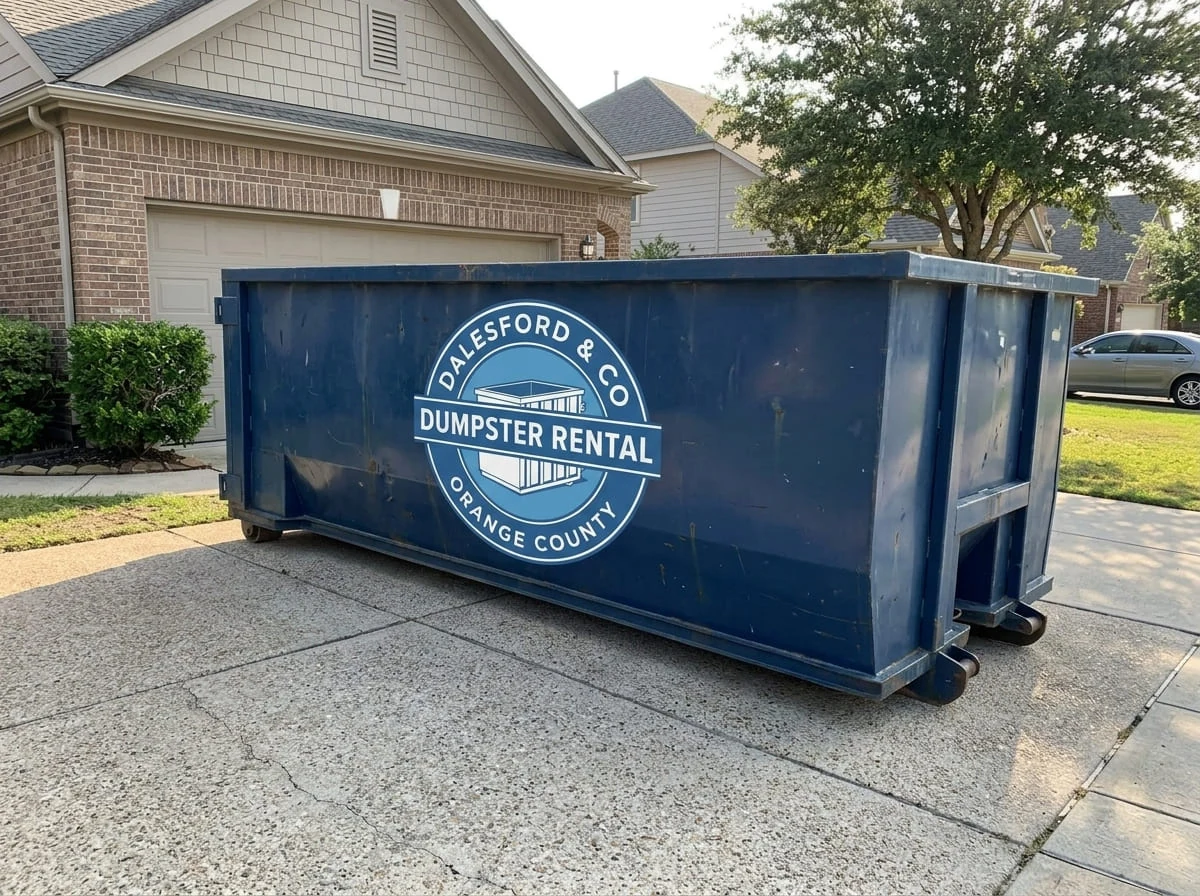
The rule specifically targets self-haulers of C&D debris. Licensed contractors removing C&D debris with their own equipment are exempted from the city's separate waste-hauling franchise requirement under a different section of the same chapter (8.29.020(G)) — a distinction worth understanding if you're working with a licensed contractor rather than self-hauling debris yourself. Regardless of who's hauling it, the city's code also requires that all containers — bins, carts and roll-off boxes alike — be sealed and watertight per city standards (8.29.120(A)), and that hauling loads be covered to prevent spillage in transit (8.29.060).
A Parallel County Program With the Same Standard
Beyond the city's own ordinance, OC Waste & Recycling runs a parallel Construction & Demolition Program across Orange County with the same 65% diversion requirement. This countywide program applies specifically when required by OC Public Works or Planning on a project-by-project basis — meaning it's conditional on the specific project's permit type and jurisdiction, not a single blanket rule that automatically applies to every haul everywhere in the county. Diversion under this program can be met through reuse, recycling or composting at county-approved facilities, or by using a county-franchised hauler, and participants are required to retain tonnage reports and disposal receipts to verify compliance. The program can be reached directly at CD@ocwr.ocgov.com or (714) 834-4000.
Where Diverted Material Actually Goes
OC Waste & Recycling is the official Orange County agency responsible for solid waste disposal, operating public landfills, protecting the local environment, investing in renewable energy enterprises, and promoting recycling countywide. The agency runs three active landfills — Olinda Alpha, located near Brea; Frank R. Bowerman, located near Irvine; and Prima Deshecha, next to San Juan Capistrano — which collectively process more than 4 million tons of solid waste annually, among the largest such operations in the state. Diversion efforts under both the city's ordinance and the county's parallel program exist specifically to keep as much material as possible out of those three landfills.
What This Means for Your Project
The practical takeaway for a homeowner or contractor working in Orange: 65% of your project's construction and demolition debris needs to be diverted from landfill, in compliance with CALGreen standards, if you're self-hauling under the city's own code. If a licensed contractor is hauling debris on your behalf, ask them directly how they're handling diversion compliance, since the franchise exemption shifts the practical mechanics but not the underlying goal. And if a county-level program applies to your specific project because of its permit type, expect a requirement to retain tonnage reports and disposal receipts as proof.
How We Handle Diversion on Our End
Clean concrete, metal and unpainted wood pulled from a job get routed for recovery on our end rather than buried wherever's easiest — part of running an operation that takes the city's 65% standard seriously rather than treating it as someone else's problem. If your project has specific diversion documentation requirements tied to a permit, mention that when you call and we'll work with you on it.