Orange Park Acres (often called OPA) is an unincorporated community and census-designated place surrounded by, but not legally part of, the City of Orange — an important distinction for property owners here, since it means OPA residents deal with Orange County government rather than Orange's own city hall for permitting matters. That's confirmed by the community's own recent history: in the City of Orange's August 27, 2026 annexation vote covering the El Modena, North El Modena, Olive Heights and Santiago Creek areas, Orange Park Acres was explicitly removed from consideration after resident and council pushback — a real, current sign that OPA remains its own distinct unincorporated territory as of this writing, not a neighborhood absorbed into Orange proper.
Founded in 1928 as a Deliberate Equestrian Neighborhood
Orange Park Acres was founded in 1928, specifically as an equestrian community, and that founding character has held for nearly a century. The community today has an estimated 5,500 residents across about 1.4 square miles, is known for a semi-rural, upper-middle-class character, and includes numerous horse stables and fenced equestrian trails throughout. Like Villa Park, many OPA streets deliberately lack sidewalks and street lighting — a choice that preserves the equestrian, low-density feel rather than an oversight. Nearly all homes sit on a minimum 20,000-square-foot lot, roughly half an acre or more.
What a Stable-Adjacent Cleanout Actually Involves
A property with a working stable, riding arena or pasture generates debris a typical suburban cleanout never touches — old fencing and gate hardware, worn stall mats and bedding material, tack-room contents during a renovation, and general outbuilding debris from barns and equipment sheds. None of that is unusual for us, but it's worth describing specifically when you call, since stable-related material sometimes needs to be kept separate from general construction or household debris depending on what it is and where it's headed.
Big Lots Mean Bigger Projects — and More Placement Room
OPA's 20,000-square-foot-minimum lots give most properties considerably more room to work with than a standard Orange County residential lot — more space to stage a container, and often more flexibility about exactly where it sits relative to the house, the stable and any working equestrian areas. That flexibility is genuinely useful on a property where the container needs to avoid an active riding area or stay clear of horse traffic patterns during a renovation.
Permitting Runs Through the County, Not City Hall
Because Orange Park Acres is unincorporated territory, permitting authority sits with OC Development Services and OC Public Works rather than any city government — confirmed directly on the county's own Encroachment Permits page, which explicitly lists "Refuse Container Bins" as one of the activity types requiring an encroachment permit when a container sits in the public right-of-way rather than entirely on private property. Applications for county encroachment permits go through myOCeServices.ocgov.com. If your container will sit entirely on your own driveway or private property, this typically isn't a concern — it's placement in the public right-of-way (street, road, alley) that triggers the requirement.
Sizing for an Equestrian Property Project
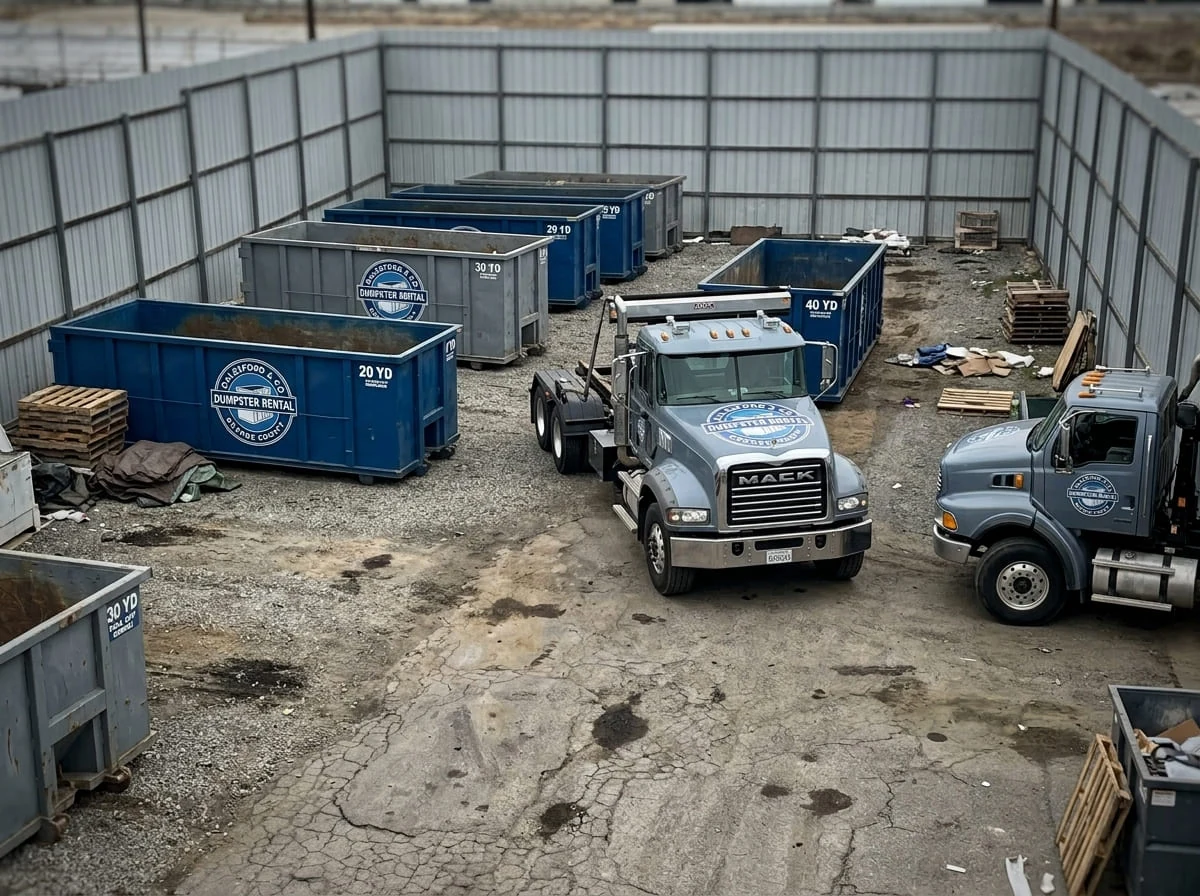
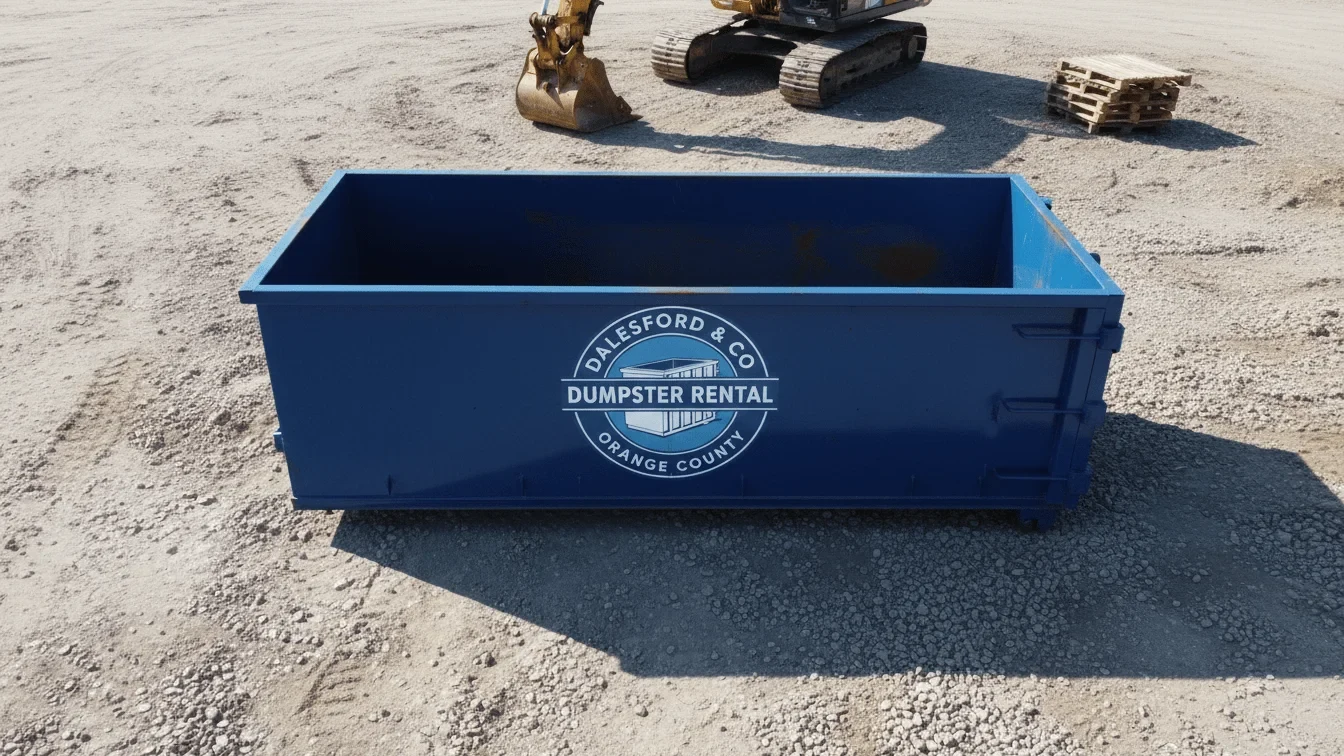
A house-only renovation on an OPA property sizes the same way any comparable renovation would — a single-room project often fits a 15 or 20 yard, and a fuller home renovation often calls for a 20 or 30 yard. Add in stable, barn or fencing debris and the math changes: a full property refresh covering both the house and equestrian structures frequently calls for a 30 yard, or a sequence of containers timed to different phases of the work.
If horses are actively stabled on the property during a renovation or cleanout, tell us when you call — we'll plan delivery timing and container placement around keeping the animals' routine and any active riding areas undisturbed, not just around the construction itself. Call (657) 282-4983 and describe the property, the project, and whether horses are on-site, and we'll work out sizing and placement together.