Roofing Tear-Off Dumpster Sizing Guide for Orange County Homes
Roofing material is one of the most commonly underestimated loads we haul. Here's why weight, not volume, decides the right container size for a tear-off — and why Southern California's own mix of tile and shingle roofs matters.
7 min readUpdated 2026-04-13By Dalesford & Co Dumpster Rental Orange County
Why Roofing Debris Is Different From Everything Else
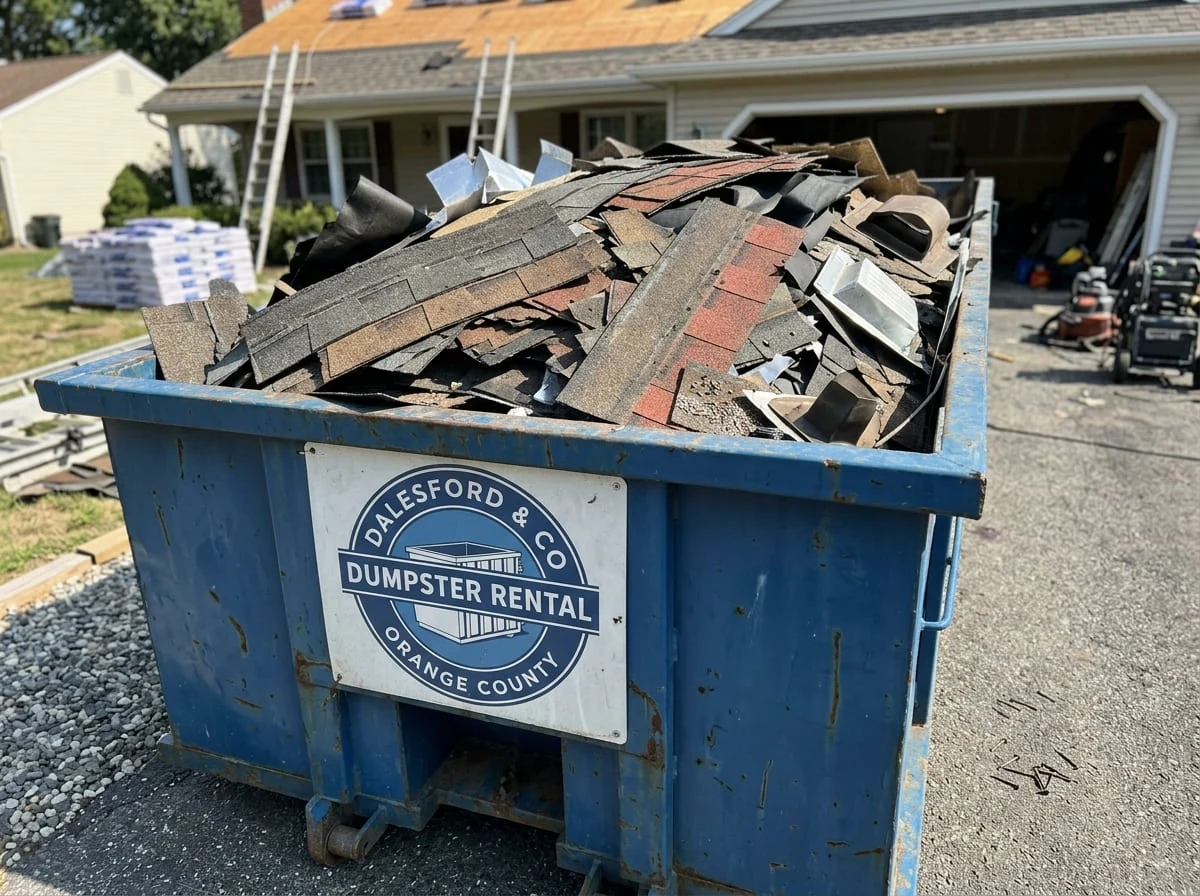
Most household and renovation debris is sized by volume — how much space it takes up. Roofing debris flips that logic. Old shingles or tile, underlayment and any decking that has to come out are dense, heavy materials, which means a roofing job can hit a container's weight limit well before the box looks anywhere near full. It's one of the most common sizing mistakes we see: someone books a container based on how big their roof looks from the ground, and it ends up underweight-rated for the actual job.
What a Full Tear-Off Actually Weighs
A single layer of asphalt shingles typically runs a few hundred pounds per roofing square (a 10-by-10-foot section), and many older Orange County homes have two or even three layers of shingles stacked from prior re-roofs that never got torn off first. Multiply that across an average home's roof area and the total weight adds up fast — often enough to fill a 20 yard container's weight allowance on a completely ordinary-sized home, even though the shingles themselves would only loosely fill a fraction of the box by volume.
Tile Roofing: A Genuine Southern California Wrinkle
Concrete and clay tile roofing is common across Southern California, including many homes throughout Orange and the surrounding cities, and it changes the sizing math again. Tile is considerably denser than asphalt shingle by volume, which means a tile tear-off of the same roof size can weigh substantially more than an equivalent shingle job. If your roof is tile rather than standard asphalt shingle, mention that when you call — it's one of the first questions that changes what size container actually makes sense.
Roofing Season Follows the Storms Here Too
Orange County has real, documented storm history of its own — including the February 2024 atmospheric river storms that led Orange County to declare a state of emergency alongside seven other Southern California counties, and the region's own Santa Ana wind season, which brings genuine wildfire risk to canyon-adjacent communities east of Orange each fall and winter. Roofing work tends to spike in the weeks after any significant regional storm as homeowners get repairs scheduled. If your roofing job followed storm damage, it's worth mentioning any additional damage — gutters, siding, downed branches — when you call, since a mixed storm-damage load sizes differently than a roof-only tear-off.
Choosing the Right Size for Your Roof
As a rough guide: a single-layer asphalt shingle tear-off on an average-sized home often fits a 15 or 20 yard container. Multiple layers of old shingles, a tile roof, a larger roof footprint, or a full tear-off down to the decking usually calls for a 20 yard at minimum, and sometimes a 30 yard on a larger home. If your roofer hasn't assessed the job yet, it's usually better to size after that assessment than to guess — the number of shingle layers, or the fact that it's tile rather than shingle, matters more than the roof's visible size.
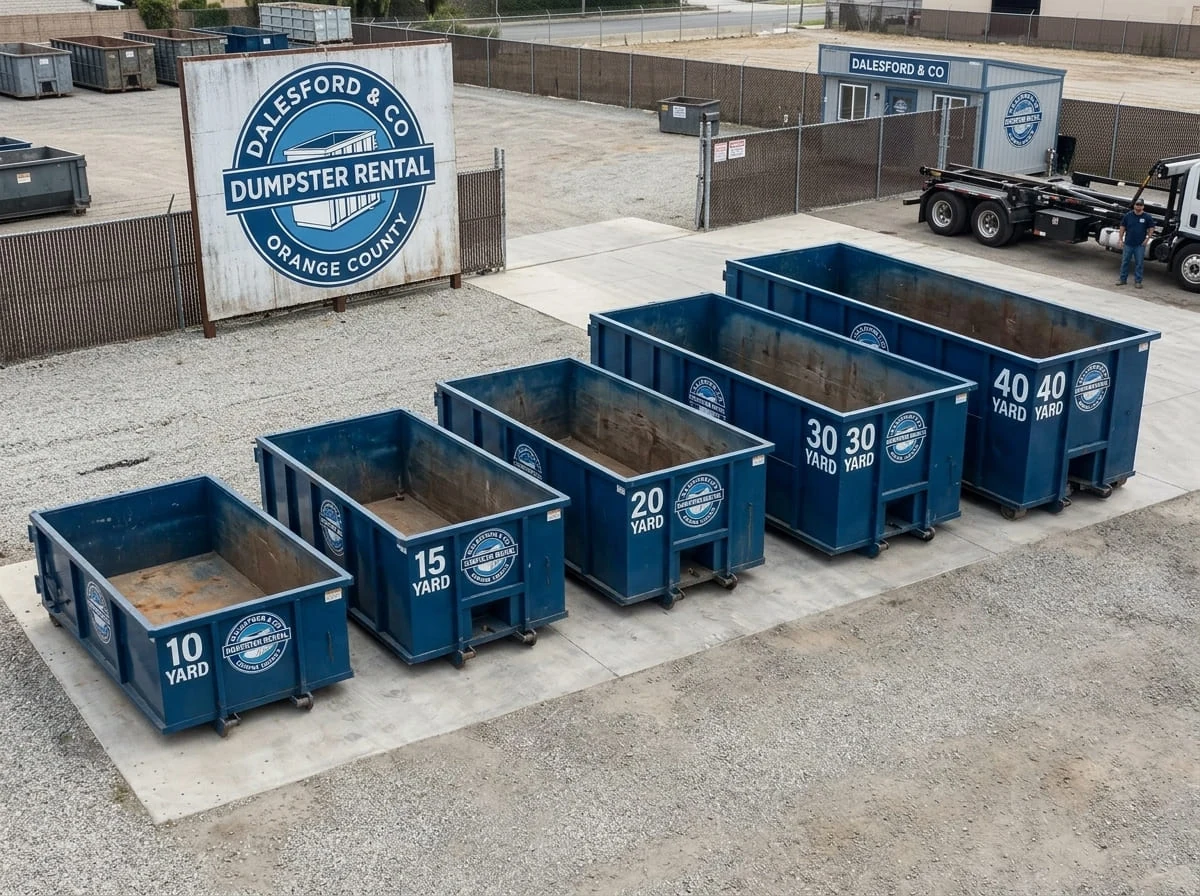
Roll-off dumpster sizes available in Orange, CA and across Orange County
Commercial jobs and major demolitions — our largest container for the biggest loads.
Scheduling Around Your Roofer's Timeline
Most tear-offs move fast once they start — a full residential re-roof is often a one- or two-day job once material and crew are on-site, which means the dumpster typically only needs to be there for a short, defined window rather than sitting for weeks. Coordinate delivery with your roofer's actual start date rather than booking too far ahead, and let us know if the job might run into a second day so we can plan pickup around the real schedule instead of an estimate.
What Roofers Wish Homeowners Knew About Sizing
One thing worth passing along from the roofing crews we work with regularly: the number of tear-off layers, and sometimes even the roofing material underneath a homeowner's own assumption, is almost never obvious from the ground. It's genuinely common for a homeowner to be surprised when a roofer finds two or three layers of old shingles, or discovers tile where they expected shingle. That's exactly why we'd rather size a container after your roofer has had a look at the deck, not before — it's the difference between guessing and knowing.
Dalesford & Co Dumpster Rental Orange County
Written by the team that coordinates every delivery out of our yard on 931-945 W Hoover Ave in
Orange. We haul roll-offs across Orange County and North and Central Orange County every week. Questions about
your own job? Call (657) 282-4983.
Talk to a real person
Ready to book a container in Orange?
Call and describe the job. Flat price, stated tonnage, and a delivery time on the same call.
Why does a roofing job need such a large dumpster if it doesn't look like much debris?
Shingles, tile and underlayment are dense and heavy, so a roofing job often hits a container's weight allowance well before it looks full by volume. That's especially true on homes with tile roofing or multiple layers of old shingles.
Does tile roofing need a different size dumpster than shingle?
Often, yes — concrete and clay tile is considerably denser than asphalt shingle by volume, so a tile tear-off of the same roof size can weigh substantially more. Mention your roofing material when you call.
Should I get a dumpster before or after my roofer assesses the job?
Usually after — once you know the number of shingle layers, the roofing material and the full scope, we can size the container correctly instead of guessing.
Do you deliver quickly for roofing jobs that follow storm damage?
Yes — call (657) 282-4983 and describe the damage and your roofer's timeline and we'll get a container scheduled to match.
The City of Orange has its own binding ordinance requiring 65% of construction and demolition debris to be diverted from landfill — a real, specific municipal code section, not a general guideline. Here's how it works and what it means for your project.
Before you dig anywhere in Orange County — a fence post, a landscaping project, a new footing — the utility-locating service that actually covers this region is DigAlert, also known as USA South or California811. Here's what that means in practice.
Picking the wrong size dumpster is one of the most common, and most avoidable, mistakes on a cleanout or remodel. Here's a straightforward way to get it right the first time.