A Real, County-Level State of Emergency
In early February 2024, a major atmospheric river event struck Southern California, and Orange County was one of eight Southern California counties to declare a state of emergency during it — alongside Los Angeles, San Bernardino, Riverside, San Diego, San Luis Obispo, Santa Barbara and Ventura counties. The National Weather Service called the event "potentially life-threatening" at the time. This is a genuinely significant, well-documented recent storm event with a real county-level emergency declaration behind it — not a generic seasonal warning.
How Much Rain Actually Fell
The February 4–7, 2024 atmospheric river event produced extreme regional rainfall totals: downtown Los Angeles received 8.51 inches of rain over three days, including its wettest single day since 2003 (4.1 inches on February 4 alone), and Bel-Air saw a peak 24-hour total of 12.42 inches. Statewide, the storm caused more than 300 landslides, left roughly 850,000 people without power, caused 9 deaths, and resulted in an estimated $3 billion in property damage, with wind gusts up to 162 mph recorded in elevated terrain. Orange County's own rainfall totals from this specific event weren't independently confirmed in our research, but the county-level state of emergency declaration itself is well documented and directly relevant to any Orange-area property owner planning for storm risk.
Why Atmospheric Rivers Are a Distinct Kind of Storm
An atmospheric river is a long, narrow band of concentrated moisture in the atmosphere that can deliver an enormous amount of rain over a short, intense period when it makes landfall — very different from Southern California's more typical light winter drizzle. Orange's own average annual precipitation is only around 15 inches, concentrated November through April, which means a single multi-day atmospheric river event can deliver a meaningful share of an entire year's rainfall in just a few days — exactly the kind of concentrated load that overwhelms drainage systems, saturates soil, and turns ordinary yard debris and storm damage into a genuinely large cleanup.
What Storm Debris Looks Like After an Atmospheric River
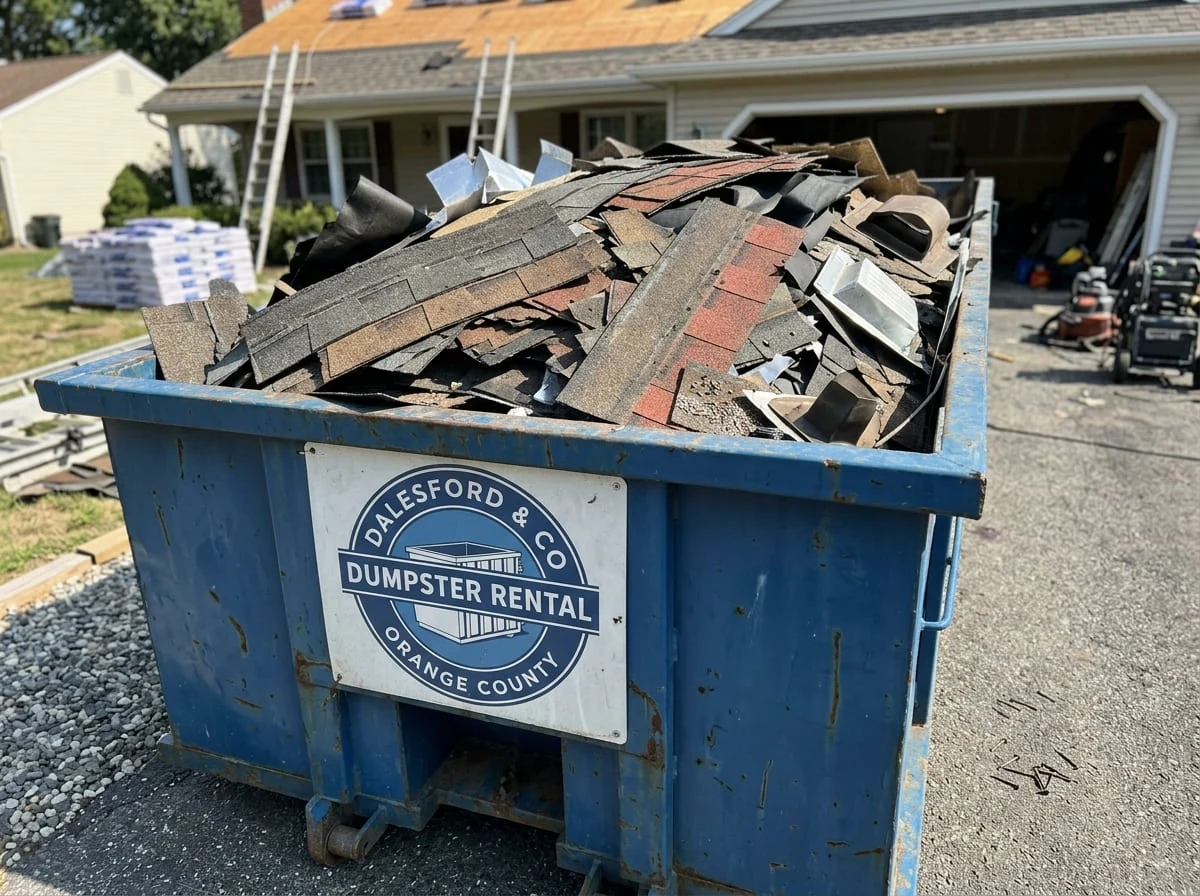
Post-storm debris from an event like this tends to be a mixed load: downed branches and storm-damaged landscaping, water-damaged material from any flooding or leaks, and sometimes fencing or hardscape damage from saturated, unstable ground. Saturated material is also simply heavier than the same debris would be dry — wet drywall, wet insulation and waterlogged yard waste all add real weight that's easy to underestimate if you're thinking in terms of volume rather than weight.
Preparing a Property Before the Next Atmospheric River
Basic preparation goes a long way ahead of Orange's wet season (roughly November through April). Clear debris and landscaping material away from drainage paths so water has somewhere to go rather than pooling against a foundation or fence line, check that gutters and downspouts are clear before the season's first significant storm, and know which parts of your property, if any, have a history of drainage or flooding issues from prior seasons. None of that guarantees against damage in a storm on the scale of February 2024, but it meaningfully reduces the odds of avoidable damage from a routine winter storm.
Sizing a Dumpster for Storm Cleanup
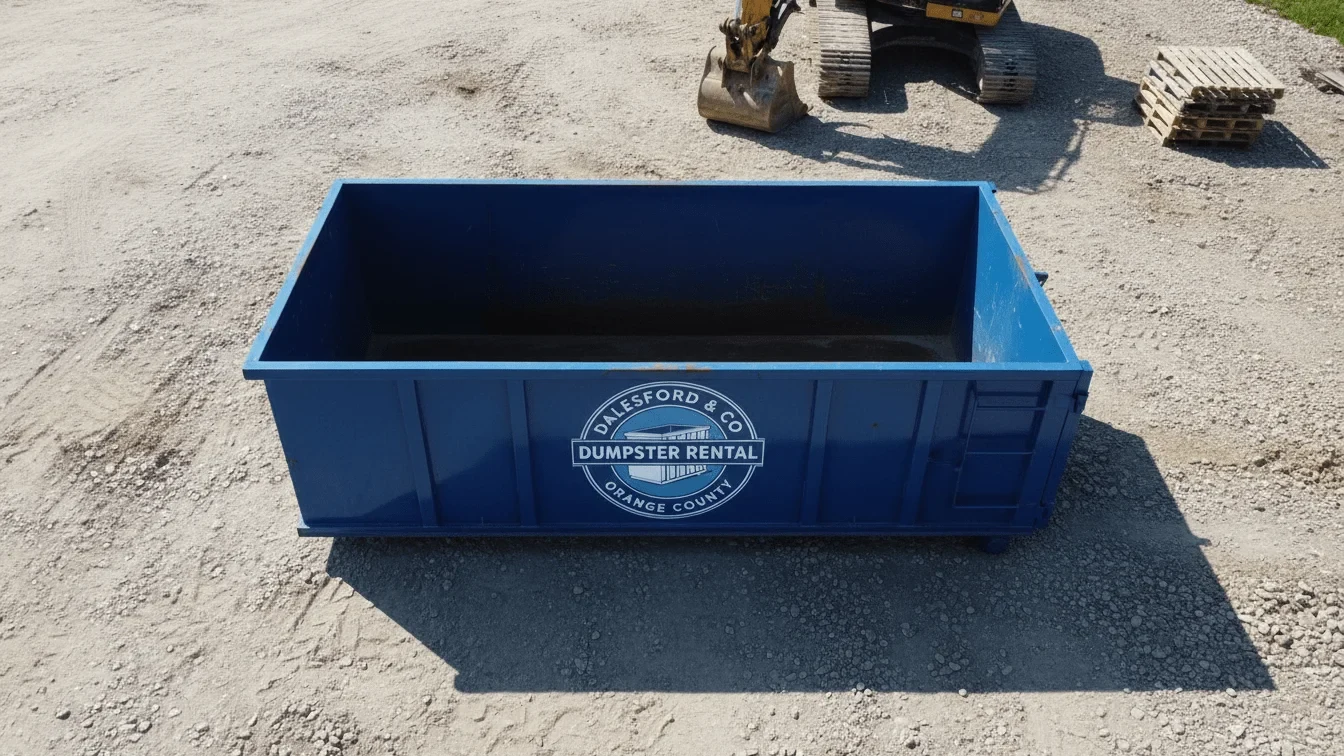
Storm debris is a genuinely mixed load — downed limbs and brush, damaged landscaping, sometimes fencing or minor structural debris, all showing up at once rather than accumulating over a project's timeline. A single yard's worth of storm debris and downed branches often fits a 10 or 15 yard container. Combined yard debris and minor property damage, or debris across a larger property, usually calls for a 20 yard or larger.
We don't perform emergency storm response and won't claim otherwise, but getting a properly sized container to an Orange-area property quickly for the cleanup that follows a storm is work we handle regularly. Call (657) 282-4983, describe what came down or what's damaged, and we'll size and schedule a container to match.